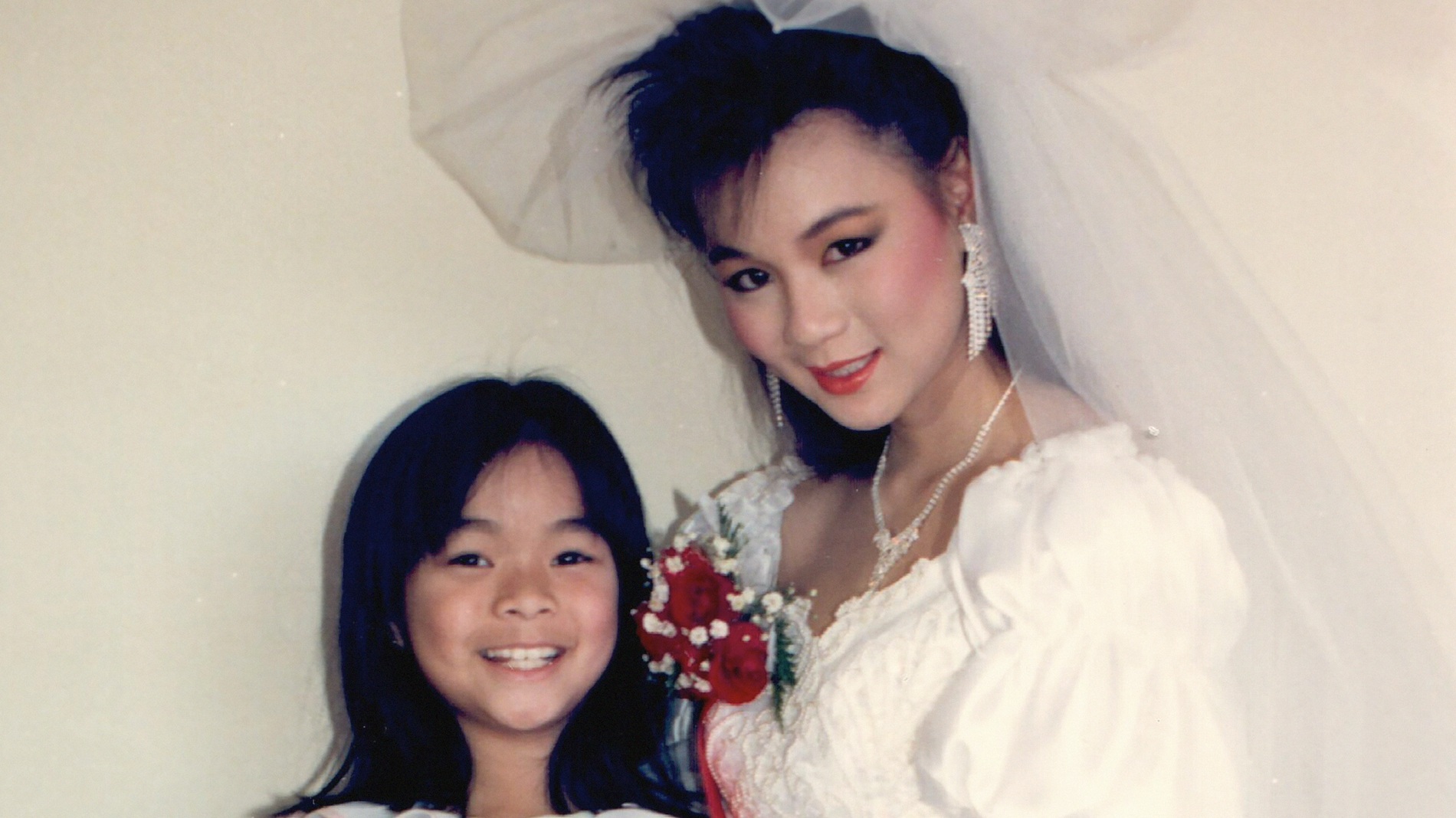
New Wave is a documentary film delving into the unexplored story of the 80s Vietnamese new wave scene. Hidden within this fun music documentary is an exploration of generational trauma, forgiveness, and motherhood. We met with the director, writer, and producer of the film, Elizabeth Ai, to discuss the journey of creating a fun yet sucker-punch of a film that hits especially close to home for children of refugees.
Origins of the Film: Leaving a Legacy
The journey for this film began in 2018. “At that point, I’ve been producing for a dozen years already, and I was pregnant with my daughter. I knew that I was going to have maternity leave, and I started to think about what I would work on as a self-proclaimed workaholic. I knew that I was going to have some free time and I wanted to do something.”
While Ai had worked with API directors previously and had alignment with them, she felt that she hadn’t made a film about her specific community – the diasporic Vietnamese community in SoCal. “I just felt like it was a big moment in my life and I wanted to do something for my daughter. So it really that’s how it started off – it was just like this idea that I needed to preserve something for her.”
During this time, she was looking at old family photo albums. As she perused pictures of her uncles and aunties, that’s when the light bulb went off: she needed to tell a story about this specific era, why they’re dressed like this, etc. This would be the first time she was directing. “I didn’t even know how much it was going to change the course of my life, or how I would as a mother. I learned a lot about myself these past seven years: it took six years to make the film, and in the last year I’ve been working on distribution. I’ve never felt more confident about who I am and knowing where I come from.”
A Shift in the Story
The initial vision of the film appeared to focus on New Wave. “It started off just wanting to talk about this history and keeping me as the filmmaker at arms’ length. We’d be looking at my uncles, my aunties, the pop stars, the fans, the community, just kind of looking at this era.” Ai thought that as part of the second generation of the diasporic community, she’d be a step removed from the trauma that the first generation tried to cope with through New Wave.
“In this story, I saw myself within it, but I had always been like, oh, they’re the ones who suffered that trauma.” While speaking to Ai, we explored how while the trauma of the second generation looks different compared to the first’s, it doesn’t mean that it doesn’t exist. “I think that as I realized how impacted that I was from everyone’s experiences and being a part of those memories, I felt very connected to this pain – and that was what I was avoiding the entire time.”
Pain and Trauma
For approximately the first three years of making the film, Ai had avoided showcasing people’s pain, as she wanted to have a different narrative around the SoCal Vietnamese community besides one of trauma. “However, I realized, years into the making, that if I hid that, it would be a disservice to the story.” It is evident during when in the film-making process this moment clicked for her; when watching the documentary, there is a shift in the mood that signifies this epiphany. “It’s when I get halfway through the process that it shifts to me realizing that I have been lying to myself all this time [about the idea] that I’m so much better off than them. This pain continues until you kind of recognize it and deal with it.”
Closer to Home
The documentary process was never supposed to hit close to home for Ai despite her connection to the subject matter. “It was supposed to be a time capsule. It was going to be fun. I just wanted to put something out in the world that’s funny and that people would engage with. I didn’t think that it was going to be holding up a mirror to me, so I didn’t think it was going to be life changing.” While she has always learned something through each project she’s been involved with, this was the first time that things she learned were so emotional. “To have taken such an emotional turn broke me in the best ways possible; it broke me so that I could be able to figure out how to rebuild myself.
Tapping into the Community
The first person that Ai interviewed for the film was Ian (Ian “DJ BPM” Nguyen), who helped get the ball rolling. “I would say I’m grateful for Ian because he was pretty receptive at first. I think he wanted to talk about what he was doing because he wasn’t a pop star; he was more of a community person and an event producer.” Other folks, like the pop stars, record label owners,, and producers were reluctant. ”You just have to fight. Tap into the right people who are connected to the right people, so that they vouch for you. It took years to really earn their trust.”
Aunt Myra: A Key Figure
Aunt Myra is one of the first people we meet in this documentary, fitting as she is one of the bigger inspirations for the film. “She definitely was a huge inspiration to me as a kid, right? Like a de facto mom in some ways for a handful of years in my life while I was a kid. She taught me about being compassionate for others, empathizing, and letting people be.” The biggest thing she imparted onto Ai? “[Not just forgiving my mom], but forgiving myself as well. It’s just like forgiveness in general, right? It’s like such a big part of healing.”
Simu Liu’s Involvement with the Film
Simu Liu serves as an executive director for this documentary film. Ai had nothing but good things to say about her interactions with him and his involvement with the project. “He’s just a nice guy. [After some exchanges discussing the film and sending rough cuts], he just said, ‘If I can lend my name to your project, I’d be happy to help you.’” Liu appears to be selective with which projects he attaches his name to, so Ai is grateful for his support.
“He’s shared some Instagram posts, and he did an introduction video for our film. So he’s been just helpful.” We also learned that Liu also had his own connection to the diasporic Vietnamese community: in Canada, he acted in the Canadian production of a play called Vietgone, by Qui Nguyen. Nguyen shared his refugee experience with Liu, which left an impact on Liu. “[Liu] and I had a great conversation about shattering these stereotypes that we are a monolith [since all immigrants’ experiences are not the same].”
The 50 For 50 Initiative
The 50 for 50 initiative was a response to the events surrounding the film in 2024. In June 2024, New Wave premiered at the Tribeca Film Festival and won a special jury award. It also got coverage from The New York Times and Vogue. “I couldn’t believe it. I think maybe it’s just I’m sharing that insecurity of it being “just an Asian film,” like that same feeling when you live in a white supremacist world. You’re like ‘Oh, whatever. It’s not gonna win anything.’ But I’m so grateful that our film premiered. And then we get these reviews and we get an award.” She and her team then took meetings with executives, only they weren’t interested in this film.
“Everybody wanted to know what my next project was. I was like, why are we talking about the next project? What about this one? They all passed on this one. We started off with a bang at our world premiere at a pretty spectacular festival. To go from that to six months of trying and not being able to get distribution? And everybody’s like, what’s your next project? What’s the more broad commercial version? I was feeling pretty deflated.” When talking with a friend in December about the situation and her disappointment about not getting distribution, her friend suggested taking it out herself. Thus, the 50 for 50 campaign was born.
Launch Success
“We launched at the end of January online; put it out there on our social media that there’s a Google interest form – fill it out if you want us in your city. We thought it was going to take the entirety of 12 months to book 50 cities, but we booked 50 cities in three months. Most of the shows were sold out or very, very full. So we’re very proud. It was a team effort. I did not do it alone.
This campaign, 50 for 50, was knowing that it was the 50 year anniversary of the fall of Saigon. I just wanted to show up in 50 cities to say I did my best for this film. It turned out way better than I thought. So I know that there’s an audience.” Different organizations reached out to Ai and her team, from independent theatres to colleges around the country. This fall and winter, there will be another 20 or so screenings coming up. “By the end of this year, thousands and thousands of people will have seen the film, and then we’re going to do a digital release of the film before the end of the year as well.”
Motherhood: A Rewarding Endeavor
The most touching part of the experience of making “New Wave” was, for Ai, learning to be a mom. “The most beautiful thing is this transformation to understand motherhood and to be able to apply motherhood not just to the things that I do, but to myself – to be able to say I can ‘mom’ myself. And that is something that’s deeply important.”
ELIZABETH AI – Director, Writer, Producer, p.g.a.
Elizabeth Ai is a Chinese Vietnamese American award-winning filmmaker, storyteller, and author. Her debut feature documentary, NEW WAVE, premiered in competition at the 2024 Tribeca Festival, earning a Special Jury Mention for Best New Documentary Director and critical acclaim from The New York Times, Vogue, IndieWire, Los Angeles Times, and San Francisco Chronicle. The New York Times selected it as a festival Critics’ Pick, calling it “a soft scream of a film” about ’80s Vietnamese diaspora culture, while Vogue praised its revelatory storytelling.
She is the author of New Wave: Rebellion and Reinvention in the Vietnamese Diaspora and an Emmy winner and nominee for her branded content with ESPN, VICE, and National Geographic. She created the original pilot for VICE/Munchies’ Bong Appétit, which was later picked up for a series on Viceland. Her producing credits include Dirty Hands, Saigon Electric, Ba, and A Woman’s Work: The NFL’s Cheerleader Problem. An alum of Sundance, Tribeca, Berlinale, and Firelight Media, Ai’s work has been supported by the Center for Asian American Media, Cinereach, Ford Foundation, and the National Endowment for the Humanities.
Website | Instagram | Trailer | LinkTree | Facebook
Photo Credit: new wave | Written By: Rachel Bui | Edited By: Diana