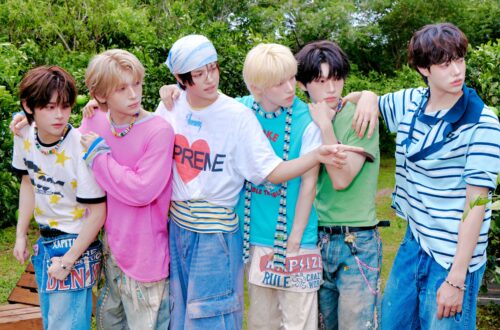

Once known internationally as a member of B.A.P, ZELO is entering a new chapter—one defined by creative independence, performance, and a willingness to explore beyond familiar boundaries. Now as a solo artist, he is building a musical identity that reflects where he is today, blending his background as a dancer and performer with Latin pop, R&B, and other global influences.
His latest single, “ELA,” released via VLACKSQUAD, follows “Cola Comigo” and continues his exploration of Latin-inspired sounds. Built around warm rhythms and a performance-driven approach, the track is less about telling a single literal story and more about creating an immediate physical reaction. Before its official release, ZELO introduced “ELA” to thousands of fans at WATERBOMB, giving the song its first live stage in an atmosphere known for its massive energy.
For ZELO, the new music represents more than a change in sound. It reflects a growing confidence in making his own choices and creating a complete artistic experience through music, choreography, styling, and visuals. In this exclusive interview with HypnoticAsia, ZELO discusses “ELA,” his relationship with Latin music, returning to the stage as a solo artist, revisiting B.A.P songs, and the future of his increasingly global sound.
Introducing the New ZELO
For ZELO, music and performance have always been closely connected. After years of dancing and making music, his solo career has given him the opportunity to explore sides of himself that were not necessarily visible before.
“I’m ZELO. I’m an artist who tells my story through music and performance,” he says. “I’ve been dancing and making music for a long time, and now, as a solo artist, I’m exploring new sides of myself by creating my own music, performances, and visuals.”
His recent releases, including “ELA” and “Cola Comigo,” have allowed him to experiment with Latin pop and global sounds, but he does not want to put himself into a single genre.
“Moving forward, I want to continue exploring different styles without limiting myself to any particular genre.”
The Rhythm Behind “ELA”
“ELA” came together naturally from ZELO’s interest in Latin music and his instinctive connection to rhythm as a dancer. Rather than approaching the track with a single narrative in mind, he wanted the music to communicate through movement.
“‘ELA’ came together very naturally. I wanted to combine the Latin music rhythms I’ve recently been interested in with my own performance-driven style.”
Instead of creating something that listeners would need to interpret literally, ZELO wanted the song to produce an immediate physical response. “Rather than trying to tell one specific story in a very literal way, I wanted to create something that makes your body react first, something that makes you want to move freely when you hear it.” That philosophy also shaped the way he approached the performance. “That’s why I approached the song with the performance in mind as well as the music itself.”
Ultimately, ZELO sees “ELA” as both a reflection of where he is now and an introduction to where he could go next. “To me, ‘ELA’ represents the kind of music I want to make at this point in my life, while also serving as a starting point for exploring even more diverse directions in the future.”
Finding a Connection Through Latin Music
ZELO’s interest in Latin rhythms is rooted in his identity as a performer. As a dancer, he is particularly sensitive to the way rhythm can immediately move an audience.
“Because I’m a dancer, I’m very sensitive to rhythm. I think Latin music has a natural power to make you move as soon as you hear it.” His previous experiences performing in South America with B.A.P also played an important role in his growing interest in the genre. Seeing how audiences responded to music firsthand left an impression on him.
“My experiences performing in South America during my time with B.A.P also had a big influence on me. Seeing firsthand how people there receive and enjoy music made me want to explore this kind of music even more.”
For ZELO, the connection goes beyond simply incorporating a particular genre into his music. Latin rhythms complement the performance-centered identity he is developing as a solo artist. “I also think it fits very well with my performance-centered style. I want to create music that doesn’t just stop at listening, but can actually be felt through the body.”
Taking Ownership of His Artistic Direction
The transition from being part of B.A.P to becoming a solo artist has brought ZELO a greater sense of creative responsibility. While his time in B.A.P taught him how to contribute to a group, his solo career has required him to make more decisions on his own. “I think the biggest change is that I’ve learned to take responsibility for my own choices.”
“When I was active with B.A.P, it was important to fulfill my role well as a member of the group. Now, there are many more things I have to think about and decide for myself, from the music to the performance and visuals.”
That process has also encouraged him to better understand his own artistic preferences. “Through that process, I’ve gradually come to understand more about what kind of person I am, what I like, and what kind of music I want to make.” If the ZELO of his B.A.P years was characterized by energy and ambition, he now sees himself as an artist with a stronger sense of personal storytelling.
“If the ZELO of the past was full of energy and ambition, I think the ZELO of today is becoming an artist who can tell more of his own story, drawing on all those experiences.”


Music, Movement, and the Complete Experience
ZELO’s creative involvement does not stop with the recording of a song. As a solo artist, he approaches music, choreography, styling, and visuals as interconnected parts of the same artistic statement.
“I try to be directly involved in as many aspects as possible. For me, music and performance aren’t separate things. From the moment I’m creating a song, I naturally think about what kind of movements would suit it and how I want to present myself on stage.”
Having greater creative freedom as a solo artist allows him to incorporate his ideas into virtually every part of the presentation. “Especially as a solo artist, I have more opportunities to make my own choices, so I try to reflect my ideas not only in the music, but also in the choreography, styling, and overall visual direction.” Ultimately, ZELO does not view a song as complete when the audio is finished.
“I don’t want to simply complete a song as a piece of music. I want to complete it as an entire image and experience.”
Bringing “ELA” to WATERBOMB
Before “ELA” was officially released, ZELO gave the song its first live performance at WATERBOMB, one of Korea’s biggest summer music festivals. Performing an unreleased song in front of thousands of people naturally came with nerves.
“I was extremely nervous. Since the song hadn’t officially been released yet, I was curious about how people would react to it.”
But once the music began, the audience quickly changed that feeling. “But the moment the music started and I saw the audience’s reaction, I think I felt more energy than nervousness.”
For ZELO, watching people respond to music they were hearing from him for the first time was especially exciting. “It was especially thrilling to see people immediately respond to music they were hearing from me for the first time.”
Introducing “ELA” to the world on such a large stage became a meaningful milestone in his new chapter. “Being able to introduce ‘ELA’ to the world for the first time on such a huge stage has become a very special memory for me.”
Returning to the Stage as a Solo Artist
Stepping onto a major Korean festival stage again felt very different from ZELO’s previous experiences with B.A.P. With a group, the energy of a stage is shared among multiple members. As a solo performer, that responsibility falls entirely on him.
“It felt completely different from before. When I performed with B.A.P, we created the stage together as a group. This time, I had to carry the energy of the entire stage on my own, so there was definitely a lot of pressure.” At the same time, that pressure became an opportunity to introduce audiences to the person and performer he has become.
“At the same time, I saw it as a great opportunity to show people who I am as an artist today. I really enjoyed creating the stage by exchanging energy directly with the audience.”
After spending so much time away from a major festival environment, returning as ZELO the solo artist carried particular significance. “Especially after such a long time, being able to stand on a major festival stage again as the solo artist ZELO was very meaningful to me.”
Revisiting B.A.P Through a New Perspective
WATERBOMB also gave ZELO an opportunity to revisit his past. Alongside his new solo material, he performed solo versions of B.A.P songs, bringing music associated with an earlier period of his career back to the stage.
“It was a very strange and emotional feeling.”
The songs carried memories of his youth and the years spent creating music with the other members. “Those songs hold so many memories from when I was very young and creating music together with the other members. So when I performed them on stage again, those memories naturally came back to me.” Yet performing those songs alone also changed their meaning. “At the same time, expressing those songs by myself as the person I am today felt completely different.”
Rather than attempting to recreate the past exactly as it was, ZELO wanted to reinterpret the material through his current perspective. “Rather than simply recreating the past, I wanted to reinterpret the songs through the way I feel them now and present them from my current perspective.”
“In a way, I was looking back at the past while experiencing that music as the ZELO of today.”
Where Past and Present Meet
One of the most meaningful parts of the WATERBOMB performance was seeing longtime fans share the experience with people discovering his solo music for the first time.
“It was an incredibly meaningful moment for me. It was amazing to see longtime fans who have supported me for years sharing the same space with people who were hearing the music I’m creating now for the very first time.” That support from longtime fans remains especially important to him. “I’m especially grateful that people who remember me from my earlier career are also willing to listen to and support my music today.”
At the same time, the performance allowed new listeners to discover a different side of the artist.
“And for new listeners, I think it was an opportunity to show them, ‘Oh, ZELO makes this kind of music too.’ It felt like the past and present were meeting on the same stage.”
No Limits on the Next Sound
While “ELA” continues ZELO’s exploration of Latin pop, he is already looking toward other genres. Brazilian funk, EDM, and house are among the rhythm-driven styles that have caught his attention, while R&B and pop remain part of his musical foundation. “If possible, I don’t want to set any limits for myself.”
“I’m very interested in rhythm-driven music like Brazilian funk, EDM, and house, while at the same time I want to continue developing the styles I’ve worked with before, such as R&B and pop.”
Rather than selecting one genre and staying within its boundaries, ZELO is more interested in discovering what happens when different influences collide. “These days, rather than choosing one particular genre, I’m more interested in discovering what new colors can emerge when different genres are blended together.”
He is also less interested in simply emulating a particular artist. Instead, he listens widely and takes inspiration from different elements that can become part of his own sound.
“Instead of choosing one specific artist to follow or emulate, I prefer listening to a wide variety of music and finding elements within it that I can incorporate into my own work.”
Looking ahead, he also hopes to experiment through collaborations and creative activities with artists from different regions. “In the future, I’d also like to become more experimental and explore different activities and collaborations with local artists.”
Learning to Choose for Himself
ZELO’s current artistic approach was also shaped by the time he spent away from the spotlight. Stepping back gave him an opportunity to reflect on what he truly wanted from music and performance.
“That time made me realize again that I really love music and performing, perhaps more than I had realized.”
During periods when he was constantly busy, he had less opportunity to stop and consider the reasons behind his work. “When I was constantly busy with activities, I didn’t have much time to deeply think about why I was doing what I was doing. By taking some time to focus on myself, I actually became even more certain about how much music and dance mean to me.”
The experience also taught him the importance of pursuing what feels genuine rather than trying to satisfy outside expectations. “I also learned how important it is to choose what I genuinely want rather than focusing on the version of myself that other people expect me to be.”
That mindset now influences how he approaches his career. “So now, rather than putting too much pressure on the outcome, I’m more focused on building things one step at a time in a direction that I truly like and believe in.”
Creating Music Without Borders
With Latin and other multicultural influences becoming increasingly important to his work, ZELO sees international connection as a major part of his future.
“It’s extremely important to me.”For him, m usic has the ability to communicate beyond language, something he experienced himself through Latin music.
“I believe music can communicate emotions and energy beyond language. One of the reasons I became interested in Latin music is that even without completely understanding the language, I could still enjoy it through the music and rhythm alone.”
He hopes his own music can create that same kind of connection for listeners around the world. “I want my music to be something that isn’t only consumed in Korea, but something that people in other countries can also feel and enjoy in their own way.”
Rather than restricting himself to the framework of K-pop, ZELO wants his music to represent his identity as an artist. “Rather than staying within the framework of K-pop, I want to connect with more people through music that represents the artist ZELO.”
Beyond the ZELO People Remember
Despite the intensity he displayed during his B.A.P years, ZELO says that image does not capture everything about his personality. “People might think I’m simply a very strong and energetic person.”
While that intensity was genuine on stage, he also describes himself as someone who enjoys quiet time and spends considerable time thinking. “I showed a lot of intensity on stage, but in reality, I also enjoy spending quiet time alone, and I tend to think quite deeply about things.” More importantly, he hopes fans understand that his B.A.P-era identity was only one part of who he is.m“I also hope people don’t think that the version of me I showed in B.A.P was everything I am.”
“The ZELO from that period was certainly a part of me, but I now have different experiences and perspectives that have shaped who I am today.”
Through his solo music, he hopes listeners will continue discovering those different sides. “So I hope that through my music, people will be able to discover different sides of me and think, ‘Oh, ZELO had this side to him too.’”
“Wow, He’s Changed a Lot”
For listeners who have followed ZELO since his B.A.P days, “ELA” offers an opportunity to hear just how much he has evolved while recognizing the performer who has always been there.
“First of all, I’d like them to feel, ‘Wow, he’s changed a lot.’” But that evolution does not mean abandoning the energy that defined him. “At the same time, I hope they can still feel that the energy and passion for performance that the ZELO of the past had are still there.” With “ELA,” he wants to make it clear that he is not simply revisiting his past.
“Through ‘ELA’, I want to show that I’m not simply someone continuing what I did in the past. I’m an artist who is still creating new music and new sides of myself.”
Perhaps most importantly, he wants the song to leave listeners curious about what comes next. “And if listening to this song makes people wonder, ‘What kind of music is ZELO going to show us next?’ I think that would be a great beginning.”
A Completely New ZELO
“ELA” may be the latest step in ZELO’s journey, but he sees it as the beginning rather than a destination. Moving forward, he plans to continue developing the Latin pop and global influences heard in “ELA” and “Cola Comigo” while exploring sounds he has yet to reveal.
“I want to show even more diverse music and performances in the future.” “I’d like to continue developing the Latin pop and global sounds I’ve explored through ‘ELA’ and ‘Cola Comigo’, while also challenging myself with genres and styles that I haven’t shown yet.”
His ambitions extend beyond simply releasing songs. He envisions an artistic identity where every part of the work connects—from the music itself to the stage, choreography, performances, and visuals.
“And I don’t want my work to end simply with releasing music. I want to become an artist whose music, stages, performances, and visuals all have a unified sense of direction.” Most importantly, ZELO does not see his new chapter as an attempt to erase his history.
“I hope this new chapter isn’t about erasing the ZELO of the past, but about using everything I’ve experienced so far to create a completely new ZELO.”
As he continues exploring global sounds, new genres, and new creative collaborations, the next stage of ZELO’s career remains open-ended—and that uncertainty is part of the excitement. “I’m also excited to see how far I can go from here. I hope my fans will continue to watch and share that journey with me.”
Interview by Diana